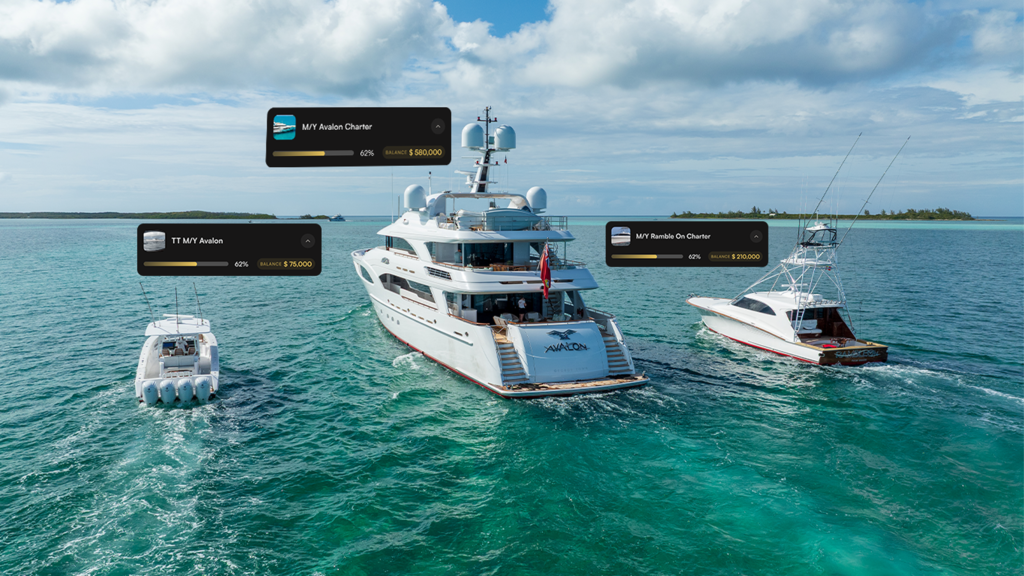
Six-figure losses, intercepted payments and convincing fake emails are exposing a financial weakness behind some of the world’s most sophisticated yachts.
In July, a yacht broker handling a high-profile Mediterranean charter was caught in a phishing scheme that resulted in a €58,000 loss (roughly $67,000 USD) after fraudulent payment information was substituted into what appeared to be legitimate correspondence. The broker was ultimately reimbursed by its insurer, but the money had already been sent.
It wasn’t an isolated incident.
Marine technology company OmniAccess documented another case in which a yacht captain’s email was compromised, attackers impersonated him in communications with vendors, and two fraudulent bank transfers totaling $100,000were discovered through the yacht’s payment application.
And BOAT International has reported a separate case in which a superyacht crew followed payment instructions that appeared legitimate and sent $100,000 to a fraudulent account.
The International Yacht Brokers Association has been warning the industry about exactly this scenario for years. IYBA describes criminals gaining access to or imitating legitimate email communications, changing wire instructions and directing money into fraudulent accounts before the intended recipient realizes the payment never arrived. IYBA says yacht brokers and other members of the industry have already fallen victim to these schemes.
And the numbers extend far beyond yachting. The FBI recorded 24,768 Business Email Compromise (BEC) complaints in 2025, resulting in more than $3 billion in reported losses. Across all internet crime, reported losses reached nearly $21 billion. In BEC cases that included transaction information, wire transfers and ACH accounted for 86 percent of reported transaction activity. The fraud can be remarkably mundane: an authentic email conversation is compromised, familiar payment instructions are altered, and a legitimate employee sends money to a fraudulent account because everything about the request appears routine.
How Is This Still Happening?
For all of the technology aboard a modern superyacht, the financial side of running one can remain surprisingly old-school.
Charter funds are wired. Vendors email invoices. Crew members make purchases on shared cards. Receipts are collected. Captains check whether payments have arrived. Management teams reconcile expenses. Owners often receive the complete financial picture after much of the spending has already happened.
Even the industry’s own fraud-prevention guidance reveals how dependent the system has been on manual processes. After an attempted yacht wire-fraud incident, one brokerage told IYBA’s Compass that it changed its procedures so every wire had to be verbally verified with both the bank and the client before money was transferred.
Captain Jesse Clinton knows that uncertainty firsthand.
“In yachting, you almost become conditioned to delays. A broker says the wire has been sent, the owner wants to know if the funds have arrived, the crew is waiting to provision the boat, and everyone’s checking accounts trying to figure out where the money is. That’s just how the industry worked.”
The yacht can be tracked in real time. The money surrounding it often cannot.
Bringing the Money Into Real Time
That’s where Asset Card enters the picture.
In layman’s terms, Asset Card gives the financial side of a yacht its own real-time dashboard.
Rather than money, cards, receipts and budgets living in separate places, Asset Card organizes them around the yacht, charter or individual project. Dedicated accounts and expense cards can be assigned to specific budgets and team members, and authorized users can see purchases as they happen.
Who spent it. Where it was spent. Which budget it came from. How much remains.
All visible without waiting for the end-of-month reconciliation.
For Clinton, the difference became clear the first time he used Asset Card aboard a yacht.
“Our first load fee came in, the charter broker sent the wire, and my chief stewardess came into the wheelhouse and said, ‘We already got the money,'” he recalls. “I remember thinking, ‘Whatever these guys are doing, I want a piece of it.’ That’s unheard of in my industry.”
Clinton went from customer to investor and now serves as Asset Card’s Global Head of Growth.
Asset Card was originally developed for another industry notorious for complicated projects and moving budgets: construction. Co-founder Brendan Ginns says the problem he was trying to solve was less about accounting than timing.
“Business owners don’t need better historical reporting. They need meaningful insights while there’s still enough time to make a decision. Once the project is over, the report is valuable for learning, but it can’t change the outcome.”
Applied to yachting, the idea is remarkably simple.
Know where the money is while it is moving, not weeks after it moved.
For an industry capable of monitoring a multimillion-dollar yacht from nearly anywhere in the world, that may be the next piece of technology that should have been onboard all along.